
Malabar’s Melodic Soul: A Deep Dive into Mappila Music, Folklore, and Its Legendary Artists
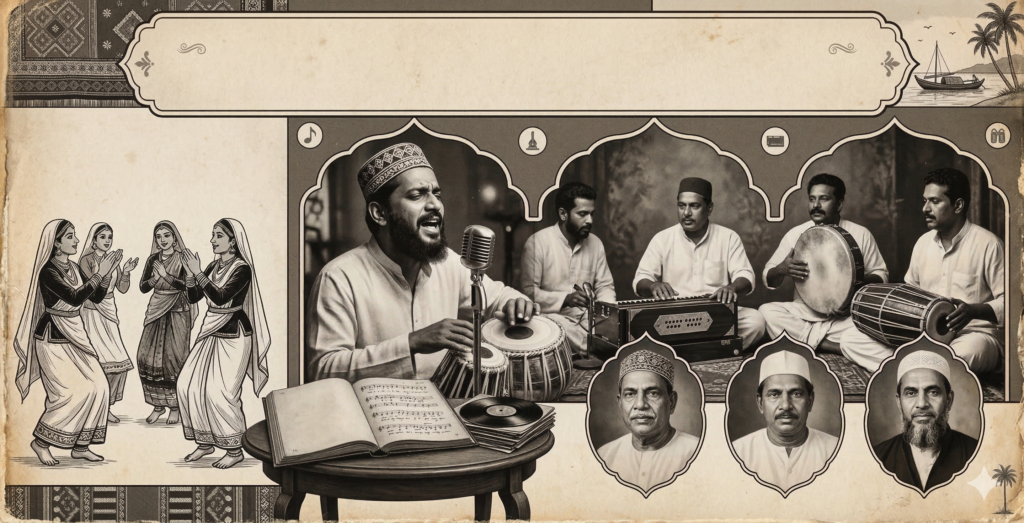
Mappila music, often known as Mappila Pattu, is a vibrant and distinctive genre of folk music originating from the Malabar region of Kerala, India. It’s a beautiful confluence of Indian, Arabic, and Persian musical traditions, deeply embedded in the cultural fabric of the Mappila Muslim community. These lyrical compositions, primarily in a colloquial blend of Malayalam and Arabic, narrate tales of devotion, historical events, social commentary, and poignant romances. Mappila Pattu is more than just music; it’s a living archive of Malabar’s rich Islamic heritage, performed during weddings, festivals, and various social gatherings, enchanting audiences with its unique rhythmic patterns and soulful melodies.
The Enduring Tapestry: Historical Roots and Evolution of Mappila Music
The genesis of Mappila music can be traced back to the arrival of Arab traders and Sufi saints along the Malabar coast centuries ago. This cultural exchange led to a fascinating synthesis, where local Malayalam linguistic structures and indigenous musical forms blended seamlessly with Arabic poetic metres and melodic sensibilities. Early Mappila songs were often devotional, known as Maulood and Ratheeb, recited during religious ceremonies and celebrations, reinforcing community bonds and spiritual identity. This initial phase laid the groundwork for a truly unique musical genre, distinct from both classical Indian and purely Arabic forms.
Over time, Mappila music evolved beyond purely religious themes, embracing a broader spectrum of human experiences. Historical narratives, particularly those recounting battles and the bravery of Malabar’s heroes, became popular, known as “Kissa Pattukal.” Alongside these heroic ballads, songs reflecting social dynamics, satirical observations, and the joys and sorrows of daily life emerged. The genre became a dynamic medium for expressing collective memory, community values, and personal emotions, often set to intricate folk rhythms that were perfect for group dances like Oppana and Kolkali, integral parts of Mappila cultural events.
This evolution signifies the adaptive nature of Mappila music, always staying relevant to the changing times while preserving its core identity. The lyrical beauty, often steeped in metaphors and imagery drawn from both Islamic and local Malabar traditions, provided a rich tapestry for storytelling. The melodic structures, while showing influences from Carnatic and Hindustani music, retained a distinctive flavour, often using microtones and improvisational flourishes that resonated deeply with the local populace.
Pillars of Poesy: Legendary Artists and Their Seminal Contributions
The golden era of Mappila music was largely shaped by a few towering figures, with **Moinkutty Vaidyar (c. 1807-1891)** standing as its undisputed patriarch. Hailing from Ottupara, Kondotty, Vaidyar was a prodigious poet-composer who transformed Mappila Pattu into a sophisticated literary and musical form. His magnum opus, “Badar Pattu” (The Song of Badr), recounts the historical Battle of Badr with epic grandeur and lyrical prowess, blending classical Arabic prosody with colloquial Malayalam, making it accessible to the masses. His “Malappuram Pattu” immortalised the valor of local heroes, showcasing his versatility in handling both religious and secular themes with equal finesse. Vaidyar’s compositions are renowned for their intricate meter, rich vocabulary, and profound emotional depth, setting an unparalleled benchmark for future artists.
Following Vaidyar’s legacy, figures like **Chalilakath Kunhamu (late 19th – early 20th century)** made significant contributions. Kunhamu was celebrated for his captivating “Kissa Pattukal,” which often depicted romantic tales and historical narratives in a melodious and engaging manner. His works were instrumental in popularising Mappila Pattu further, taking it from community gatherings to more public stages. His compositions were characterized by a simpler yet equally evocative language, making them resonate deeply with a wider audience.
In the modern era, **V.M. Kutty (1935-2022)** emerged as a pivotal figure, single-handedly responsible for revitalizing and globalizing Mappila music. Often hailed as the “Mappila Pattu Emperor,” V.M. Kutty composed, sang, and popularized thousands of Mappila songs, many of which became household favorites. He tirelessly worked to preserve the traditional essence while introducing new elements and adapting the music for contemporary audiences, taking Mappila Pattu to radio, television, and international stages. His collaborations and performances with his wife, Lathif, were particularly iconic, creating a new wave of interest and appreciation for the genre, ensuring its survival and flourishing in the modern landscape.
The Thematic Richness and Enduring Appeal of Mappila Folklore
Mappila music is inherently intertwined with the folklore and lived experiences of the Malabar Muslim community. The themes explored within these songs are incredibly diverse, ranging from profound spiritual devotion and praise for the Prophet Muhammad to vivid historical narratives chronicling the valor and sacrifices of local heroes against colonial powers. These historical ballads, known as “Kissa Pattukal,” serve as crucial oral histories, preserving community memory and fostering a sense of shared identity and pride among the Mappila people.
Beyond the religious and historical, Mappila Pattu deeply delves into the realm of human emotions and social commentary. Songs about love, longing, separation, and the beauty of relationships are abundant, often expressed through poignant metaphors drawn from nature and daily life in Malabar. There are also satirical songs that critique social injustices or playfully lampoon local customs, demonstrating the genre’s role as a vibrant forum for social expression. The rhythmic variety, including the energetic beats for Oppana (a traditional dance performed by women) and Kolkali (a stick dance performed by men), ensures that the music is not just heard but also actively participated in, making it an integral part of life cycle events, especially weddings.
This rich thematic palette, combined with a unique melodic and lyrical structure, is what gives Mappila music its enduring appeal. It’s a genre that speaks to the heart, whether through the stirring tales of battle, the tender verses of love, or the spiritual hymns that elevate the soul. Each song is a miniature narrative, packed with cultural insights, linguistic nuances, and a melody that transports the listener to the verdant landscapes and vibrant communities of Malabar, making it a living testament to the region’s rich cultural heritage.
Conclusion: The Unfading Melody of Mappila Heritage
Mappila music, with its intricate blend of Indian and Arabic influences, stands as a unique cultural gem from the Malabar coast. From its origins as devotional hymns to its evolution into a multifaceted genre encompassing history, romance, and social commentary, it has consistently mirrored the lives and spirit of the Mappila community. Visionary artists like Moinkutty Vaidyar, Chalilakath Kunhamu, and V.M. Kutty have not only enriched this tradition with their genius but also ensured its continuity and popularity across generations. This vibrant folk music, deeply embedded in local folklore and cultural practices, continues to resonate, captivating audiences with its soulful melodies and profound narratives, serving as an indelible testament to Malabar’s rich and diverse heritage.